
 Written by
Shoulder injuries seem to be very common for the athletic population. Most of the clients who come in for therapy on their shoulders however, can’t answer my first question “so, what happened?”. They usually start with “it all started (some time) ago, and has been getting progressively worse”. Here’s the thing with shoulder pain- many times it’s being caused by a
weakness or compensation from another muscle group.
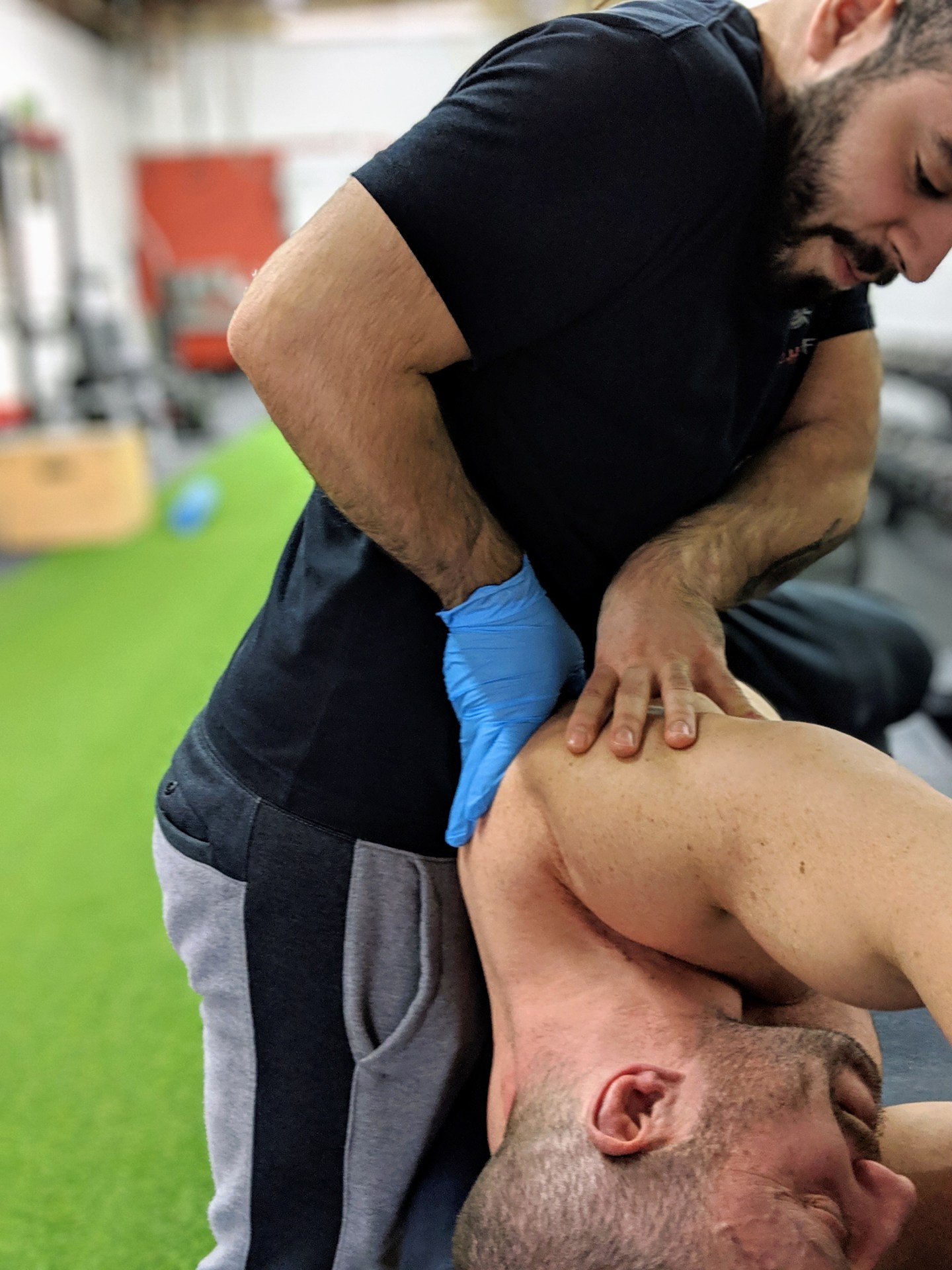
In my practice when someone comes in and points to their shoulder, I’m checking their neck, upper back, chest, their arms and wrists, and pretty much everything else associated to the upper body. Clients sometimes find it strange when I start assessing their neck before the shoulder, but I’ve found it extremely time-saving when they tell me they’ve been benching for 3 years and have never done a single trap-3 raise. You’re unbalanced. That’s fine, everyone is to a certain extent. But when you’ve done a million presses, hitting those lat pulldowns, living for the arm-pump, and never done a row to your neck, you’re just creating more holes in your already-sinking ship. Rows to your neck, face pulls, trap-3 raises, powell raises, and external rotation exercises won’t be the most exciting part of your
program and they definitely won’t be what you’ll brag about to your gym buddies, BUT if managing your shoulder pain is your goal, these should be implemented into your regimen ASAP.
Another very common cause for shoulder pain is the strength discrepancy between your push and your pull which Eric Falstrault posted about last month. “When we test the structural balance, we can easily see structural problems such as this type of strength discrepancy. For example, if your max effort bench press with a shoulder width grip is 300 lbs, you should be able to pull up 261lbs (your bodyweight included). However, you should also be able to externally rotate, seated with your elbow on your knee a 30lbs DB for a minimum of 8 reps, with both arms. I, and many of my fellow colleagues, have rarely seen someone who can respect those ratios.”
It’s always great to seek therapy when you’re in pain, however any corrective manual therapy should ALWAYS be followed by corrective physical activity. If you have a nagging shoulder and/or want to check out if your strength ratios are in check, contact us today for an evaluation and workout plan.
Andrew Tognarini L.M.T
Active Release Techniques Certified Provider
FMT Certified Provider
PICP Strength and Conditioning
Contact: andrewtognarini@gmail.com

