 Written by
Being a manual therapist allows me to treat people from all sorts of backgrounds, but the
most particular group of clients that I see on the table is athletes (accountants, you have a close 2nd). Athletes dedicate so much time and energy into their bodies, from super clean eating, to daily workouts, to active recovery days, there’s typically nothing these animals won’t do to improve their performance. Some of these athletes end up on my table due to injury/tweaking, and some for basic maintenance, but every time I ask them about their mobility work I typically get the same answer, “I know I should be stretching more”.
Ugh, I cringe every time.
It’s not because these machines aren’t stretching (although I’ll always tell them it’s a good idea to start), it’s because a lot of them are mistaking the term mobility with flexibility. I’m not going to get into the details of mobility/flexibility and strength training (because Eric Falstrault just published a post on his blog that is absolute fire: https://www.bodhifitonline.com/2018/09/26/flexibility-and-strength-training/#more-6277), however I will get into the importance of adding mobility work into your regular routine.
No matter what your sport is, your body absolutely needs a sufficient level of mobility. Let’s get this out of the way: flexibility refers to the degree of ability your muscles can stretch (being able to touch your toes), mobility refers to the effective range of motion those muscles and joints are able to achieve (performing a squat correctly). And here’s the kicker; the higher the flexibility, the lower the stability. Mobility is that balance.
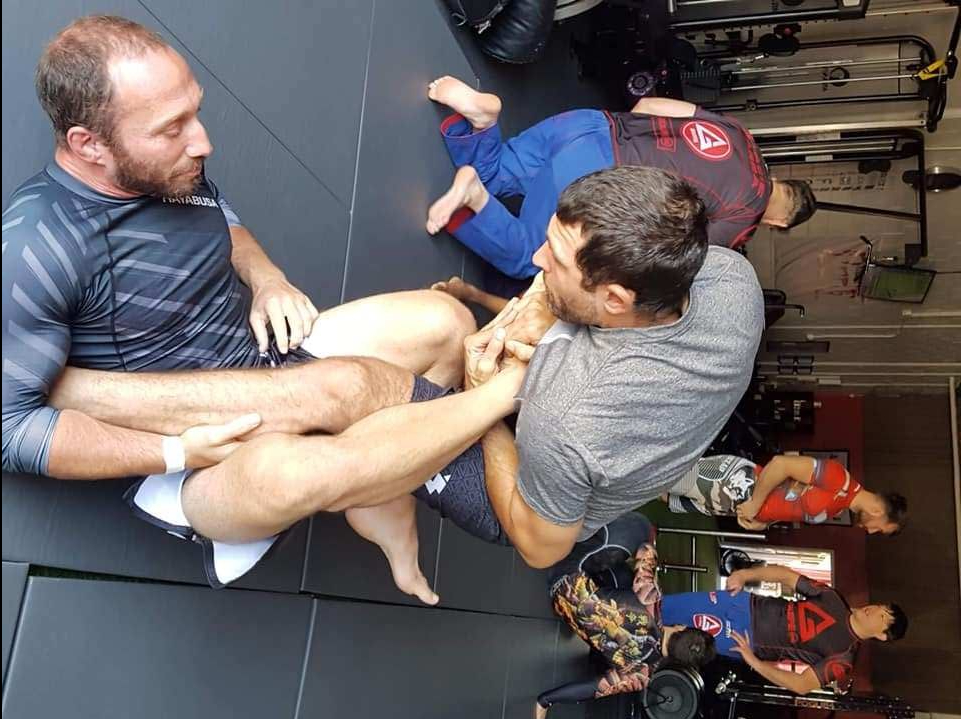
In Jiu Jitsu, it definitely pays to have a sufficient amount of mobility. If you have tight shoulders, you’ll probably tap to a kimura at the kid’s class. Besides saving you from complete embarrassment, mobility will save you from injuries as well. ESPECIALLY in the lower body, where just the slightest increase in pressure will make the difference between a tap, and that dreaded “pop”. A high level of mobility in your ankles and hips will help protect you from leg injuries- provided you tap when necessary.
This fact isn’t just true for Jiu Jitsu players, all athletes will benefit from a higher degree of mobility in their lower body and can keep injuries at bay for a much longer time.
I’ll also add this little gem: the reason why your mobility might suck in a certain range of motion, is because you don’t strength train in that range of motion. For example, if you’ve never gone bar-to-chest in your bench press, you’re doing yourself a disservice in terms of an incomplete strength curve, as well as potential injury.
Mobility work, such as foam rolling, flossing, smashing, and pin+stretching, are all great and all have their place. I’ll be writing up another article with different mobility exercises you can do on the regular for your lower body, but for now it’s just important to remember that mobility and flexibility are not the same. An athlete with better mobility is an athlete less injured.
Take care of your body and your body will take care of you. If you need help taking care of your body, you can always contact me!
Andrew
7 ronin