
 Written by
Probably one of the issues that plagues gyms is lower-back pain. Whether it is from an old injury, lack of movement, too much sitting, or just an excuse not to lift, it is something that should be addressed since you could be missing out on big lifts and big gains.
For those that just use their back as an excuse not to lift, this might help build confidence as well (unless you also tell people you can’t squat because of your knees, but used to “squat like 450 back in the day, bro!”).
In order to understand why we’re using the training principle of the Strength Curve, you first need to understand what that is. Basically, in most strength movements you will perform, there is an beginning range, mid range, and end range. There generally is also an “easy” part of the lift and a “hard” part. These easy and hard parts demonstrate where the working muscle is either under the least or most tension, or in a mechanically advantageous or disadvantageous position. Take a squat for example: In the starting position you are the strongest (i.e knees and hips fully extended), as you descend, the movement becomes increasingly more difficult, reaching it’s hardest point at the very bottom of the squat, then reversing and becoming easier as you come back up. So, knowing that, you can play with the each of these positions using a method like an inertia squat where you overload the mid to top range (i.e the “easier” or stronger part) by using safety pins to stop the bar from going lower than the desired position. Using this method you keep the bar in the range you want to train and load the bar appropriately which in this case would be significantly heavier than what you would normally squat.
Using this method you can train a range of the squat that is normally under-loaded because in a full range movement the weight you lift can only be as heavy as you can lift at the weakest point in the strength curve.
When using this method to train the back, we need to consider the parts that we’re training. Most of the posterior chain training methods involve hip extension so what we’ll need to do is play with the different angles.
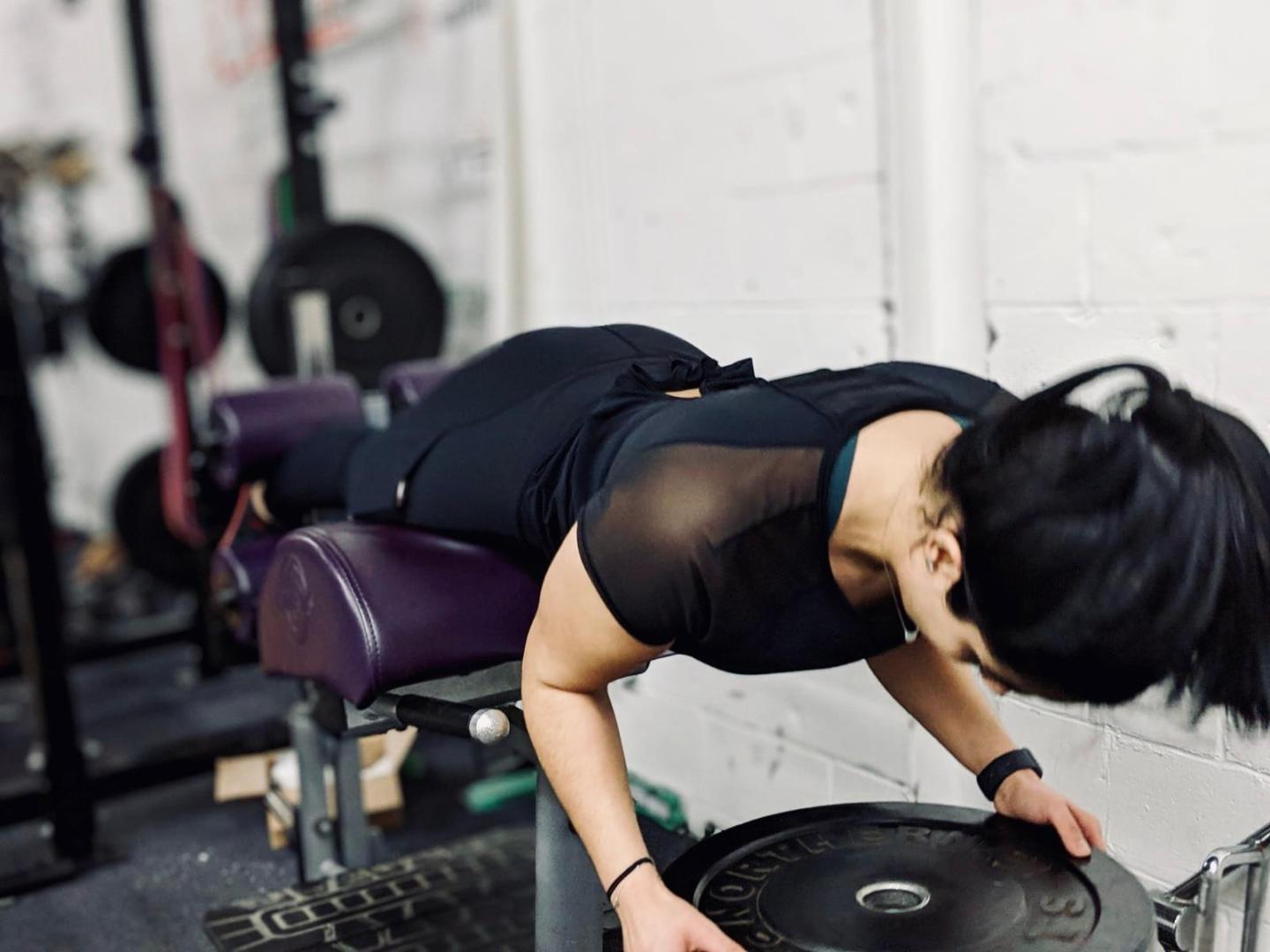
For Back-Extension methods: Alternating between the different angles of extension (i.e 45 degrees, 60 degrees, horizontal, etc). Each of these will elicit a stimulus on the same muscle group, but with the peak load (hard part) being at different angles.
For Good Mornings: Alternating between Standing position and Seated positions.
For Deadlift Variation: Alternating between Romanian deadlifts (Though keep in mind that a standing goodmorning and regular Romanian deadlift work in the same range), and different heights of rack deadlifts will be your best bet to stimulate as many different ranges of the posterior chain as possible. Rack deadlifts are particularly important because like the squat, they’ll be able to properly train a range in the deadlift that doesn’t normally get stimulated much.
Finally, rarely do muscles work independent of one another in the body, so including abdominal work will help to engage muscles of the lower back more efficiently, as well and proper hamstring development. There is definitely no one-size-fits-all method, but including these variations of posterior chain work throughout your training sessions will definitely make an improvement!
James

